
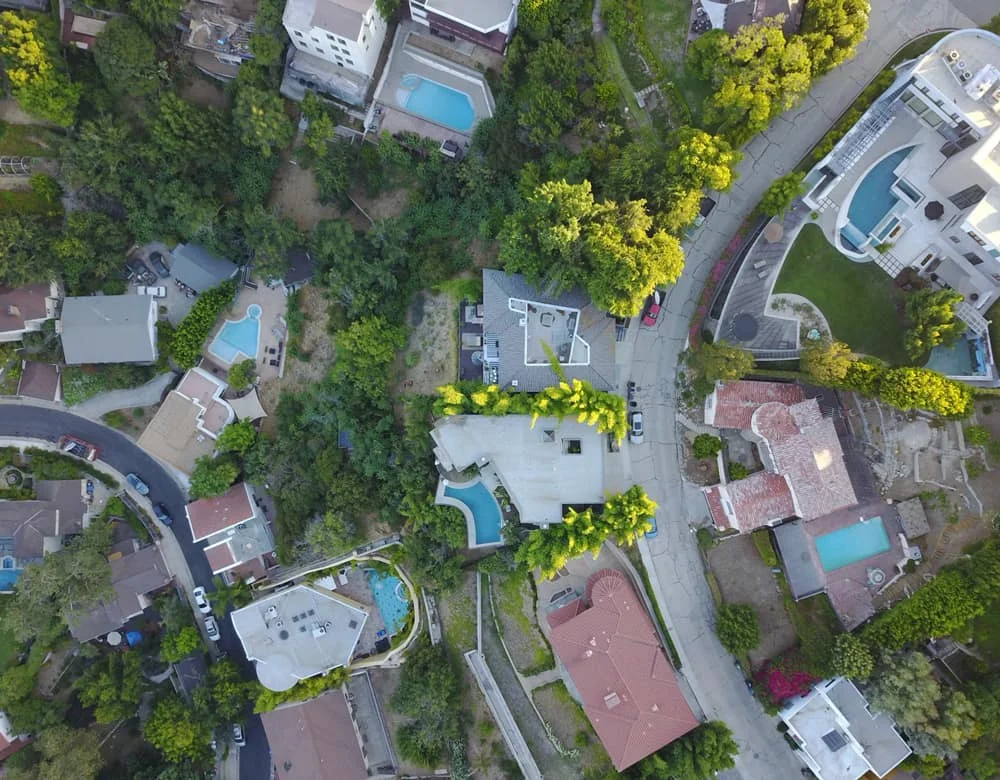
Survey Works provides property surveys in San Antonio and across Bexar County for homeowners, home buyers, sellers, real estate agents, and residential builders. A property survey establishes where the property lines run on the ground and documents how the improvements sit inside them, so a closing, a fence project, or a permit application rests on a defensible line.
Property surveys in San Antonio are also referred to as property line surveys, residential land surveys, or boundary surveys depending on who is asking and what triggered the need. In every case the deliverable is a sealed survey drawing, prepared by a licensed land surveyor, with monuments set on the corners so the line is visible on the ground.
What a San Antonio property survey covers
Every property survey reconciles two records. The legal record is the deed and the filed plat, recorded with the Bexar County Clerk and searchable through the county's free official records portal, and the physical record is the monuments, iron pins, and fence lines the field crew finds on the site itself. The sealed drawing brings both into a single set of corners, with any encroachments or easements documented. When the project is more about documenting what exists on the site than the lines themselves, the scope shifts toward an as-built survey, and topographic, tree, or utility detail can ride on the same deliverable when the project needs it.
When San Antonio clients order a property survey
A buyer orders one during the option period to confirm the lot being purchased matches the legal description in the deed. A homeowner orders one before building a fence, because San Antonio requires a permit for any new fence and for replacing more than a quarter of an existing one, and the city's height limits run three feet for a solid front-yard fence, five feet for an open style like wrought iron, and six feet along side and rear lines. An owner planning a pool, an addition, or a casita orders one because the city's Development Services Department requires a site plan that matches the recorded plat and shows the property lines, easements, and setbacks in relation to the proposed work.
On a resale, the title company and the lender decide whether a new survey is needed, since Texas does not require one to close. Sellers can often reuse an existing survey by signing the T-47 affidavit, or the T-47.1 declaration added with the November 2024 TDI forms, which skips the notary. Both forms state that nothing affecting the boundaries has changed since the survey was drawn, so a pool, an addition, a moved fence, or a new easement since that date means the form cannot be signed and a new survey goes back on the closing checklist.
Survey Works schedules the fieldwork so a survey tied to a closing is scoped to land inside the option period, and a fence or permit job is scheduled on the owner's timeline.
Property survey vs. boundary survey
Homeowners and agents tend to say property survey while surveyors, engineers, and attorneys say boundary survey, and for residential work in San Antonio the two names usually describe the same scope. Some Bexar County boundaries take far longer to retrace than others, and that retracement work is where a boundary survey earns its own page. For commercial transactions that need the national standard, the equivalent product is an ALTA/NSPS Land Title Survey.
Survey Works has performed property surveys across Texas for over 10 years, and our San Antonio crews work the full range of Bexar County housing stock, from newly platted lots on the far West Side to established neighborhoods like Alamo Heights, Terrell Hills, and Olmos Park to acreage outside the city limits. We survey residential property throughout the metro, including Stone Oak, Converse, and Universal City, and every project runs through the same process, calibrated to the evidence the site presents and the use the survey has to support.
For a property survey anywhere in the San Antonio area, request a proposal and we will walk you through the scope, timeline, and deliverable format.