
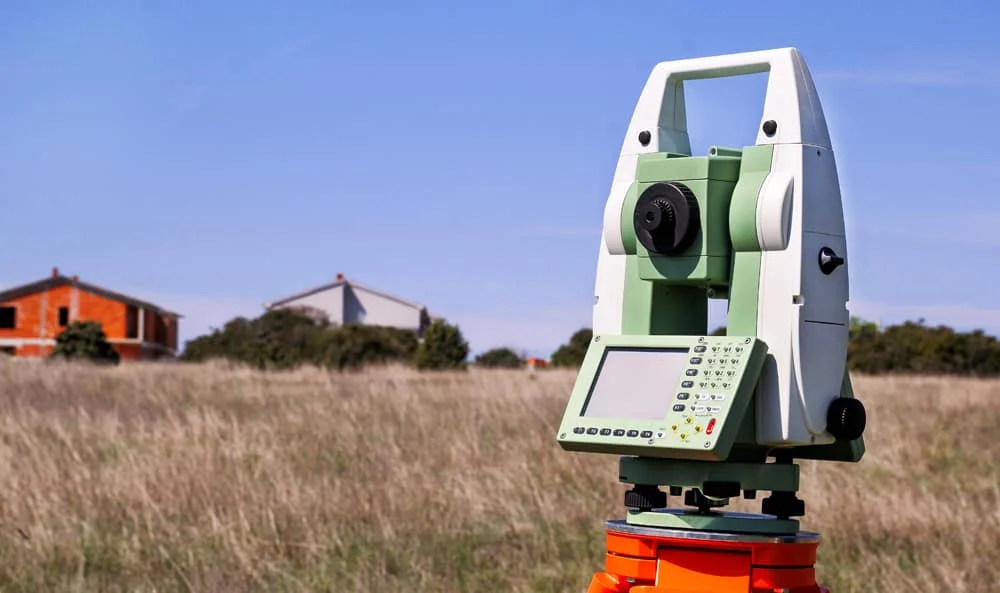
Survey Works provides boundary surveys for property owners, buyers, contractors, and developers across Texas. A boundary survey establishes and documents the location of a parcel's property lines, marking the corners with physical monuments and producing a sealed drawing that holds up in legal, construction, and real estate contexts. Clients order boundary surveys before installing a fence, closing on a property, resolving a dispute with a neighbor, or starting any project where the property line matters.
Boundary surveys are sometimes referred to as property line surveys, property boundary surveys, fence line surveys, or lot line surveys depending on the project and the reason the survey is needed. The deliverable in every case is a sealed drawing prepared by a licensed land surveyor, with field monuments set on the corners so the line is visible on the ground.
What a boundary survey establishes
Every boundary survey reconciles two sources of evidence. First, the historical record: the recorded deed, the filed plat, the neighboring property records, and the chain of title affecting the parcel. Second, the physical record on the ground: existing monuments, iron pins, fence lines, and other evidence of where past owners and surveyors understood the boundary to be. Our job is to reconcile those two records into a single set of corners that follow the law of the land and the physical evidence of how the boundary has been respected over time.
The deliverable includes a sealed survey drawing with the property's legal description, measured boundary lines tied to the record, physical markers set on each corner, and evidence of any encroachments or adverse possession issues identified during fieldwork. For projects that need additional detail, the boundary scope pairs naturally with topographic, tree, and utility scopes on a combined deliverable.
When you need a boundary survey
Most boundary surveys are triggered by a project or transaction that depends on a defensible property line. A homeowner orders one before installing a fence along the line with a neighbor. A contractor orders one before breaking ground on a new build so the foundation, setbacks, and utility connections all tie to verified corners. A buyer orders one during due diligence on a land or home purchase to confirm the property being bought matches the property described in the deed. A developer orders one at the start of due diligence on a parcel being acquired or subdivided.
Boundary surveys also come up in more specialized cases: resolving an adverse possession claim, settling a fence or encroachment dispute with a neighbor, a family partition of ranchland, documenting the line before a partial sale or lot line adjustment, or updating the record on property that has been in the family for decades without a recent survey.
Why Austin boundary work isn't always a one-day job
The time required for a boundary survey varies dramatically with the neighborhood and the age of the original plat. In recently platted subdivisions, the corners were set with modern equipment and agree closely with GPS measurements, making the fieldwork straightforward. In older Austin neighborhoods, the research and reconciliation work can take significantly longer than the time spent in the field.
"A fence-line survey in a newer subdivision is typically a one-day job. The same survey in older Austin neighborhoods like Travis Heights or Clarksville can take multiple days because the original corners may have been set with a theodolite or even a measurement chain and might not agree with modern GPS or total station measurements."
— Jad Duplechain, RPLS
The difference between a two-hour job and a multi-day job is the amount of historical evidence the surveyor has to reconcile. A recent Survey Works fence-line project in a newly platted Austin neighborhood took a field crew two to three hours, with time left over to set points along the north property line as a courtesy. A similar-scope fence-line survey in Bouldin Creek ran multiple days, with the crew searching for block corners and retracing century-old survey lines to establish a defensible boundary. Both jobs are boundary surveys, and both are priced and scheduled around the evidence the site actually presents.
Survey Works has performed boundary surveys across Texas for over 10 years, from newly platted suburban lots to century-old parcels in historic Austin neighborhoods to 1,000 acre ranches in rural Texas. Every project runs through the same process, calibrated to the evidence the site presents and the use the survey has to support.
For a boundary survey anywhere in Texas, whether for a new fence, a property sale, a construction project, a family partition of ranchland, or a dispute with a neighbor, Survey Works has the field experience and the records expertise to deliver a defensible line.