
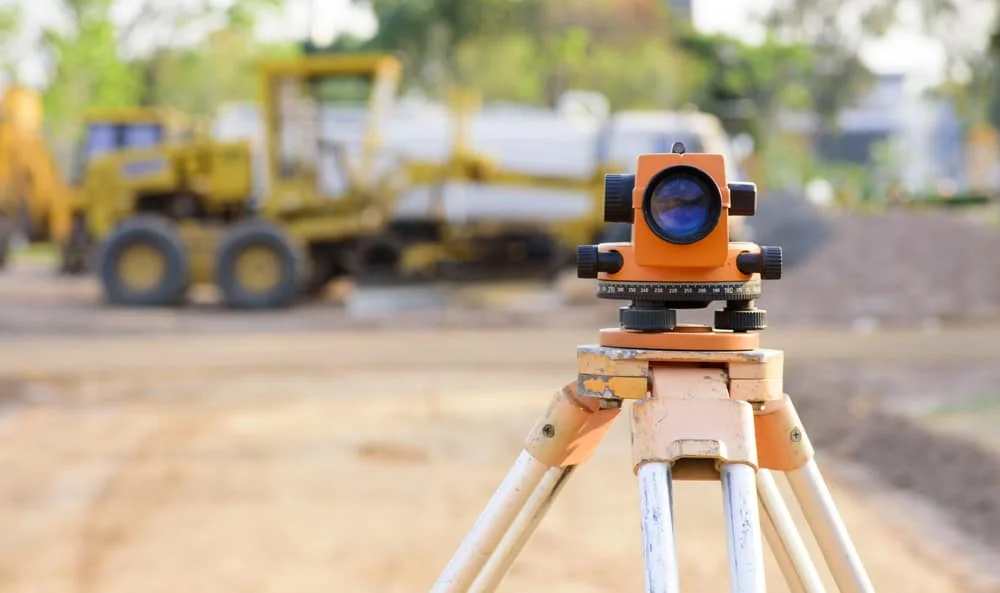
Survey Works provides form surveys for commercial builders, concrete contractors, general contractors, and construction managers working on foundation and slab projects across Texas. A form survey verifies the position and elevation of the concrete forms after they are built and before the pour, giving the construction team a chance to correct any layout or elevation issue while the fix is still cheap. The deliverable is a sealed report and exhibit, prepared by a licensed land surveyor, that documents the form position and calls out any deviations that need attention before concrete is placed.
Form surveys are also referred to as formboard surveys or pre-pour surveys depending on the project and the construction team's conventions. The scope is a quality-control checkpoint in the concrete sequence, scheduled between layout and the pour itself, that protects the owner and the design team from the much higher cost of finding the same error after the foundation cures.
What the crew captures before a pour
A form survey documents the position of the concrete forms in three dimensions, referenced to the control network or property lines and the approved site plan. On a typical project, the survey covers:
- Horizontal location of form walls, corners, and major reference points
- Top-of-form elevations at key locations along the foundation
- Slab-edge offsets relative to property lines, setbacks, and adjacent structures
The deliverable is usually turned around quickly, often within 1-2 days of the fieldwork, so the construction team can adjust the forms and hold the pour schedule.
When a form survey makes sense on a project
Form surveys are a standard quality-control step on residential and commercial foundations, multi-family construction, structural slab work, and any project where the foundation has to hit tight tolerances for downstream structural or architectural work. A general contractor schedules a form survey after the formwork is complete and before the concrete crew arrives. An owner or construction manager orders one to document as-formed conditions for the project record. A structural engineer may request one on projects where anchor placement or foundation geometry has zero-tolerance requirements tied to prefabricated steel or precast elements.
Form surveys also come up on flood-sensitive parcels where the finished floor elevation has to meet a base flood elevation, on sites where setbacks are tight, and on projects where an early deviation could cascade into expensive downstream rework if it is not caught before the pour.
The cost of catching an error pre-pour
The economic case for a form survey is simple. Commercial concrete projects have some tolerance on layout and elevation. Catching a deviation while the forms are still wood is inexpensive: the carpenters adjust, the survey crew re-verifies, and the pour proceeds on schedule. Catching the same deviation after the concrete has cured is a different story, involving demolition, rework, and schedule impacts on every trade working behind the foundation.
"A form survey catches elevation and layout deviations before the pour. If those same issues are discovered after placement, you're looking at concrete removal, rework, and schedule delays. In structural foundation work, the cost difference between early detection and post-pour correction can be a large delta."
— Rick Kinsaul, PLS
Survey Works has run form surveys across Texas for over 10 years, on commercial, civil, and residential foundation projects. Every project runs through the same process, with the deliverable calibrated to the tolerances and schedule the construction team has to hold.
For a form survey, formboard check, or pre-pour verification scope anywhere in Texas, Survey Works has the expertise to deliver the sealed surveys the project needs, on a schedule that fits the pour.